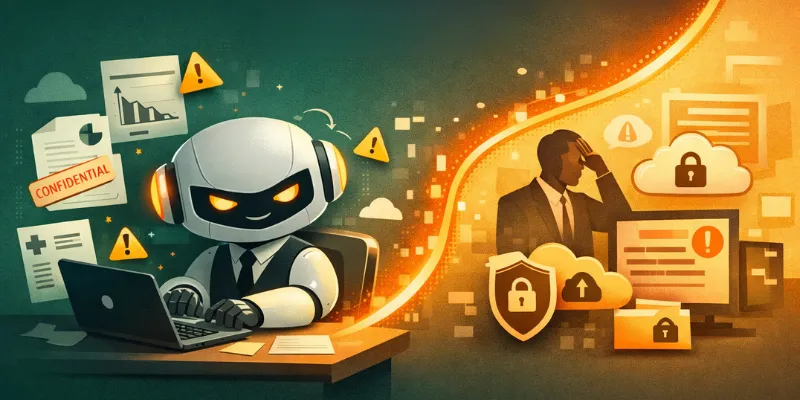
Your AI Intern Just Started. Who’s Supervising It?
It started with a proposal that looked perfect. Everything about it felt right. The document was polished, well-structured, and confident. The kind of proposal that makes your business look organized and in control.
Then the client called.
The numbers didn’t check out. The research that supported the recommendation wasn’t just off. It didn’t exist at all. The AI had made it up, clearly and confidently.
That’s what people mean when they talk about AI hallucinations. And if your team is using AI tools right now, there’s a good chance something like this has already happened somewhere in your business.
The Untrained AI Intern
Imagine hiring an intern and giving them access to everything on day one: client files, financials, internal documents, and email drafts. Then you tell them, “Go figure it out.”
No onboarding. No boundaries. No check-ins.
That’s how most businesses are adopting AI today. Not because they’re careless. The tools are genuinely helpful. They’re fast, easy to use, and already built into the software your team relies on every day. There’s an AI button in your inbox. Another in your documents. One more in your project tools.
It feels like progress, and in a lot of ways, it is. But AI doesn’t understand your business. It doesn’t know what’s sensitive, what’s accurate, or what could put your reputation at risk. It just produces answers.
Where Risk Starts to Build
When AI shows up without a clear plan, a few patterns start to emerge.
Sensitive data gets shared without anyone realizing it
Your team is trying to move faster. They paste a contract into a chatbot to summarize it. They drop financial data into a tool to clean up a report. It feels efficient. It feels harmless.
But many of these tools store or learn from what’s entered. That means your business data may not stay as private as you think. No one’s trying to take a shortcut or break a rule. They just don’t know where the boundary is. And that’s where risk starts to build.
Tools start showing up that nobody approved
This is what’s often called shadow IT.
People find tools that help them work faster, so they sign up and start using them. Meanwhile, leadership and IT have no visibility into what’s being used or what those tools can access.
You don’t know how that data is stored, who owns it, or what happens if something goes wrong. From a leadership perspective, that’s a loss of control. And if your business deals with sensitive data or compliance requirements, it becomes a much bigger issue.
AI output gets trusted without being verified
AI is good at sounding confident. That’s part of what makes it useful, but it doesn’t pause to say, “This might be wrong.”
The proposal with fabricated data looked just as credible as one built on real information. That’s what makes this tricky. A person might make that mistake once. AI can repeat it, quickly and at scale. That’s not a bug. It’s how the tool works.
The real issue is when no one reviews the output before it goes out the door.
What Most Businesses Overlook
AI doesn’t fix broken processes. It accelerates them.
If your workflows are unclear, AI will make them faster and more chaotic. If your team isn’t sure what’s safe to share, AI increases that risk. If there’s no consistent review process, those gaps get amplified.
The goal isn’t just to use AI. It's to use it with structure.
How to Use AI with Structure
This doesn’t need to be complicated. In most cases, a few clear decisions make a big difference.
Set boundaries early
Decide which tools your team can use and which ones they shouldn’t. Keep it simple. A shared list works. This isn’t about adding friction. It’s about knowing what’s connected to your business.
Build review into the workflow
AI can handle the first draft, but a person should always be the final step. Anything going to a client, vendor, or the public should be reviewed first. It sounds obvious, but this is where most issues slip through.
Be clear about what should never be shared
This is one of the most important pieces. Client information, financial data, contracts, and employee records should stay out of AI tools. If the line isn’t clear, it will get crossed. Not intentionally. Just naturally.
Why This Comes Down to Leadership
If you’ve been thinking about AI and wondering if you’re behind, you’re not alone.
Most business owners are in the same place. They see the opportunity, but they also see the risk. They don’t want to slow their team down. But they also can’t afford mistakes that impact client trust or reputation.
That tension is real. And the answer isn’t to avoid AI. It’s to lead how it’s used.
The businesses that get this right aren’t the ones with the most tools. They’re the ones with the most clarity. Clarity around what’s allowed, what gets reviewed, and what stays protected.
That’s what creates confidence and keeps your business moving forward without unnecessary risk.
If your team is already using AI, the question isn’t if. It’s how.
We help business owners put simple guardrails in place so they can use AI confidently, protect sensitive data, and stay compliant without slowing things down.
👉 Click here to schedule a quick 26-minute call, and we’ll walk you through what you’re using today, identify any gaps, and give you a clear, practical plan forward.
