News
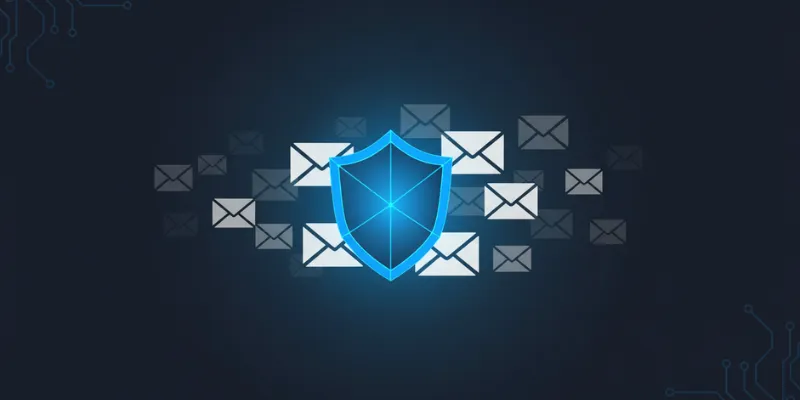
Three Email Settings That Stop Scammers From Sending Messages in Your Company's Name
Article Summary: Many people believe that an email from a company's name is automatically legitimate. Unfortunately, that's not how email works. Without the right protections in place, cybercriminals can send messages that appear to come from your business, putting your reputation, your clients, and your finances at risk. Here's how three simple security settings can help protect your business.
Picture this.
One of your clients receives an email that appears to come from your company. It uses your business name, your email address, and maybe even your logo. The message asks them to pay an invoice using new banking details or provides updated payment instructions.
The problem is, you never sent it.
This type of attack is called email spoofing, and it has become one of the most common ways cybercriminals trick businesses and their customers. The scary part is that the criminal doesn't need to hack your systems to do it. If your email domain isn't properly protected, they can simply pretend to be you.
When that happens, your clients don't just lose trust in the email. They can lose trust in your business.
The good news is that protecting your domain is much easier than most people think.
Why Email Spoofing Happens
Email was created decades ago when security wasn't the concern it is today. By default, the system doesn't verify that the sender is actually who they claim to be.
Think of it like writing a return address on an envelope. Anyone can write any name they like. Unless someone checks that address, there's no way to know whether it's genuine.
Cybercriminals take advantage of that weakness every day. They send emails that appear to come from legitimate businesses, hoping someone will click a link, open an attachment, change banking details, or transfer money.
Without the right protections, receiving mail servers have very little reason to question those messages.
Three Simple Settings That Help Protect Your Business
Fortunately, there are three email authentication records that work together to verify every email sent from your domain.
Although they work quietly in the background, they play a huge role in protecting your business.
SPF (Sender Policy Framework)
SPF tells other mail servers which systems are authorized to send email on behalf of your business.
When someone receives an email claiming to come from your domain, their mail server checks whether it came from one of those approved systems. If it didn't, the message becomes suspicious.
DKIM (DomainKeys Identified Mail)
DKIM adds a secure digital signature to every outgoing email.
That signature confirms two important things. First, the email genuinely came from your domain. Second, the message wasn't changed while it traveled across the internet.
It's an extra layer of trust that helps receiving mail servers recognize legitimate email.
DMARC (Domain-based Message Authentication, Reporting and Conformance)
DMARC brings everything together.
It tells receiving mail servers what to do if an email fails the SPF or DKIM checks. It also provides reports showing who is attempting to send email using your domain, giving your IT provider valuable insight into potential abuse.
Without DMARC, SPF and DKIM can't provide the level of protection they're designed to deliver.
The Mistake We See Too Often
Many businesses have DMARC installed, but leave it set to monitor only.
This setting, known as p=none, is designed to collect information while you confirm that all your legitimate email systems are working correctly.
The problem is that it doesn't actually stop spoofed emails.
To properly protect your business, DMARC eventually needs to move to quarantine, which sends suspicious messages to junk, and then to reject, which blocks them completely.
Monitoring is an important first step, but it shouldn't be the final destination.
What These Protections Can't Do
As valuable as SPF, DKIM, and DMARC are, they aren't a complete solution on their own.
Cybercriminals can still register lookalike domains that closely resemble yours, such as replacing ".com" with ".co" or adding an extra word to the domain name.
They can also use display names that appear legitimate while hiding a completely different email address underneath.
That's why good cybersecurity is never just about technology.
Your team should always verify payment requests, confirm banking changes by phone using a trusted number, and check the full sender address instead of relying only on the display name.
Technology reduces risk. Good habits close the remaining gaps.
Why Every Business Should Care
Some business owners assume these protections only matter if they send thousands of emails every day.
The reality is much simpler.
Your domain represents your reputation. Every email carrying your company name reflects on your business.
If someone successfully impersonates your domain, it isn't just your clients who are affected. Your employees, suppliers, and business partners can all become targets.
Proper email authentication also improves email deliverability. Email providers are placing greater emphasis on authenticated domains, making it more likely that legitimate emails reach inboxes instead of spam folders.
Whether you send twenty emails a day or twenty thousand, protecting your domain protects your business.
How to Get Started
The easiest first step is to check whether your domain already has SPF, DKIM, and DMARC records in place. Several free online tools can give you a quick snapshot.
If anything is missing or if you're unsure whether the records are configured correctly, work with your IT provider to review your current setup.
The safest approach is to:
Configure SPF and DKIM for every legitimate email service your business uses.
Enable DMARC in monitoring mode to confirm that legitimate emails are passing authentication.
Move to quarantine and then reject once everything has been verified.
Done correctly, these changes are largely invisible to your users, but they make life much harder for cybercriminals trying to impersonate your business.
Your clients trust that emails from your business are genuine. Protecting that trust is one of the simplest and most valuable cybersecurity improvements you can make.
If you're ready to take the next step, click here to schedule a quick 26-minute call. During the call, we can run a 5-minute assessment of your domain to identify security gaps and vulnerabilities. We'll help you build a roadmap to strengthen your email security and ensure your business stays protected against today's evolving cyber threats.
Article FAQs
What is email spoofing?
Email spoofing is when someone sends an email that appears to come from your business, even though it didn't. Criminals often use spoofed emails to steal money, collect sensitive information, or trick people into changing payment details.
What do SPF, DKIM, and DMARC actually do?
SPF identifies which mail servers are allowed to send email for your domain. DKIM adds a secure digital signature that proves the message is genuine. DMARC tells receiving mail servers how to handle messages that fail those checks and provides reports showing who is using your domain.
Article used with permission from The Technology Press.

FREE GUIDE
Discover The Truth Nobody Is Telling You About IT Security And The New, Critical Threats That WILL Put Your Business At Risk


Answers To Common Questions
Frequently Asked Questions
Do you offer access to senior IT consultants or a vCSO for oversight and guidance?
Yes, we offer access to senior IT consultants and provide vCSO(Virtual Chief Security Officer) as a service for our clients. Our vCSO service provides your organization with expert leadership and strategic direction tailored to your unique cybersecurity and legal compliance needs. We are here to help you navigate the complexities of cybersecurity and ensure that your security posture is robust, compliant, and capable of addressing evolving cyber threats. Book a call today to get expert help with your company’s cybersecurity and compliance.
Do you have a high level of confidence in your security posture? If so, can you explain why?
We have a high level of confidence in the security posture of our company and our clients. Our security stack includes several components to ensure strong and resilient cybersecurity measures. We provide comprehensive risk management, regular audits and assessments, advanced security technologies, employee training and awareness, and incident response planning. Our systems and solutions follow established industry standards and best practices to keep your company safe and your data secure. Since every company has different risks depending on the data, systems, utilization, and more, we can work with your team to develop a robust security plan and implement the proper measures as needed. Reach out today to strengthen your company’s security posture!
Do you have a Disaster Recovery (DR) plan? If so, what’s in place? Is it tested regularly?
We provide robust Disaster Recovery (DR) plans, covering preventative, detective, and corrective measures. Our DR strategies are tailored to each client’s specific needs and are designed to ensure rapid recovery and continuity of operations in the event of any disaster. These plans are regularly reviewed and tested to guarantee they function effectively and meet the highest standards of resilience and reliability. And if a disaster were to occur outside of regular business hours, we have you covered! At qnectU, we have a response time of mere minutes for emergency after-hours calls, ensuring a rapid response to implement your Disaster Recovery plan. Book a call today to protect your company in the event of a disaster.
Do you perform regular risk assessments?
Here at qnectU, we conduct regular risk assessments as a core part of our risk management strategy. Our process is comprehensive, involving identification, categorization, and response planning for potential security risks, including technical vulnerabilities, access controls, and more. These assessments help us understand, control, and mitigate all forms of cyber risk, ensuring that our security measures are effective and up-to-date. But most importantly, we provide continual risk assessments at pre-determined intervals based on your company’s risk level. This ensures that issues are corrected, new risks are identified, and compliance is properly documented. Want to see how our in-depth business risk assessments work? Book a consultation today to get an in-depth risk assessment of your company’s current network security.
Do you follow proven change management principles?
We are committed to following proven change management principles. We understand the importance of structured and systematic processes in implementing changes that affect cybersecurity protocols and IT environments. Our approach is based on industry-recognized frameworks and methodologies that ensure changes are managed effectively, focusing on minimizing risks, enhancing security posture, and achieving strategic objectives.
Do you address all my compliance needs, including HIPAA?
We specialize in Compliance as a Service (CaaS), and our program is designed to meet a wide range of regulatory requirements to ensure that your business adheres to the highest standards of compliance. We demonstrate our compliance through detailed assessments, documentation, and third-party audits. Our expertise and ongoing support can give you confidence that your company’s sensitive information is managed securely and in full compliance with all regulations.
Is third-party auditing provided to ensure cybersecurity and compliance requirements are being met?
In today’s world a business can easily be compromised via a “supply chain hack.” There have been several instances where the IT company has exposed all of their clients to hacking due to their own lack of cybersecurity measures. In order to prevent this within our own company, we work closely with a third party for comprehensive auditing services to ensure that all cybersecurity and compliance requirements are met. Our rigorous audit process involves a thorough examination of our systems and practices against established industry standards and best practices. This collaboration provides an objective perspective and deep expertise to identify any potential vulnerabilities, ensuring that our cybersecurity measures are robust, up-to-date, and in full compliance with regulatory demands.
What is Compliance as a Service (Caas)?
Compliance as a Service (Caas) means that our experts will give you specialized help in handling all the rules and regulations your business needs to follow. We do this by providing expert guidance to help you determine what rules apply to your business and how to follow them. All while giving ongoing support to monitor your compliance status and updates in regulations. This may also include any advanced tools to help manage compliance tasks and risk management surrounding compliance. CaaS takes the hassle out of compliance so you can focus on running your business with confidence.
Who is Greg Mauer?
Gregory Mauer is the founder and CEO of our company, a best-selling author, speaker, and a cybersecurity & compliance expert. He has been on stage with the likes of the “Nice Shark”, Robert Herjavec, Siri co-founder Adam Cheyer, and business coach and author Mike Michalowicz.
Answers To Common Questions
Frequently Asked Questions
Do you offer access to senior IT consultants or a vCSO for oversight and guidance?
Yes, we offer access to senior IT consultants and provide vCSO(Virtual Chief Security Officer) as a service for our clients. Our vCSO service provides your organization with expert leadership and strategic direction tailored to your unique cybersecurity and legal compliance needs. We are here to help you navigate the complexities of cybersecurity and ensure that your security posture is robust, compliant, and capable of addressing evolving cyber threats. Book a call today to get expert help with your company’s cybersecurity and compliance.
Do you have a high level of confidence in your security posture? If so, can you explain why?
We have a high level of confidence in the security posture of our company and our clients. Our security stack includes several components to ensure strong and resilient cybersecurity measures. We provide comprehensive risk management, regular audits and assessments, advanced security technologies, employee training and awareness, and incident response planning. Our systems and solutions follow established industry standards and best practices to keep your company safe and your data secure. Since every company has different risks depending on the data, systems, utilization, and more, we can work with your team to develop a robust security plan and implement the proper measures as needed. Reach out today to strengthen your company’s security posture!
Do you have a Disaster Recovery (DR) plan? If so, what’s in place? Is it tested regularly?
We provide robust Disaster Recovery (DR) plans, covering preventative, detective, and corrective measures. Our DR strategies are tailored to each client’s specific needs and are designed to ensure rapid recovery and continuity of operations in the event of any disaster. These plans are regularly reviewed and tested to guarantee they function effectively and meet the highest standards of resilience and reliability. And if a disaster were to occur outside of regular business hours, we have you covered! At qnectU, we have a response time of mere minutes for emergency after-hours calls, ensuring a rapid response to implement your Disaster Recovery plan. Book a call today to protect your company in the event of a disaster.
Do you perform regular risk assessments?
Here at qnectU, we conduct regular risk assessments as a core part of our risk management strategy. Our process is comprehensive, involving identification, categorization, and response planning for potential security risks, including technical vulnerabilities, access controls, and more. These assessments help us understand, control, and mitigate all forms of cyber risk, ensuring that our security measures are effective and up-to-date. But most importantly, we provide continual risk assessments at pre-determined intervals based on your company’s risk level. This ensures that issues are corrected, new risks are identified, and compliance is properly documented. Want to see how our in-depth business risk assessments work? Book a consultation today to get an in-depth risk assessment of your company’s current network security.
Do you follow proven change management principles?
We are committed to following proven change management principles. We understand the importance of structured and systematic processes in implementing changes that affect cybersecurity protocols and IT environments. Our approach is based on industry-recognized frameworks and methodologies that ensure changes are managed effectively, focusing on minimizing risks, enhancing security posture, and achieving strategic objectives.
Do you address all my compliance needs, including HIPAA?
We specialize in Compliance as a Service (CaaS), and our program is designed to meet a wide range of regulatory requirements to ensure that your business adheres to the highest standards of compliance. We demonstrate our compliance through detailed assessments, documentation, and third-party audits. Our expertise and ongoing support can give you confidence that your company’s sensitive information is managed securely and in full compliance with all regulations.
Is third-party auditing provided to ensure cybersecurity and compliance requirements are being met?
In today’s world a business can easily be compromised via a “supply chain hack.” There have been several instances where the IT company has exposed all of their clients to hacking due to their own lack of cybersecurity measures. In order to prevent this within our own company, we work closely with a third party for comprehensive auditing services to ensure that all cybersecurity and compliance requirements are met. Our rigorous audit process involves a thorough examination of our systems and practices against established industry standards and best practices. This collaboration provides an objective perspective and deep expertise to identify any potential vulnerabilities, ensuring that our cybersecurity measures are robust, up-to-date, and in full compliance with regulatory demands.
What is Compliance as a Service (Caas)?
Compliance as a Service (Caas) means that our experts will give you specialized help in handling all the rules and regulations your business needs to follow. We do this by providing expert guidance to help you determine what rules apply to your business and how to follow them. All while giving ongoing support to monitor your compliance status and updates in regulations. This may also include any advanced tools to help manage compliance tasks and risk management surrounding compliance. CaaS takes the hassle out of compliance so you can focus on running your business with confidence.
Who is Greg Mauer?
Gregory Mauer is the founder and CEO of our company, a best-selling author, speaker, and a cybersecurity & compliance expert. He has been on stage with the likes of the “Nice Shark”, Robert Herjavec, Siri co-founder Adam Cheyer, and business coach and author Mike Michalowicz.

Innovation
Fresh, creative solutions.

Integrity
Honesty and transparency.

Excellence
Top-notch services.
FOLLOW US


Subscribe to our newsletter!
COMPANY
LEGAL
© Copyright 2026 qnectU