
News

The First Week Mistake Nobody Plans For
It usually starts with something small, the kind of moment most people wouldn’t think twice about.
An email shows up early in the day. At first glance, it looks completely legitimate. It appears to come from the CEO. The name matches. The tone feels right. Even the signature looks familiar. Nothing seems out of place.
“Hey, can you help me with something quickly? I’m tied up in meetings and need you to handle a vendor payment. I’ll explain later.”
Now picture your new hire sitting there reading that message.
They’ve been with your company for four days. They’re still learning how everything works and who does what. More than anything, they want to prove they were the right hire and can be trusted to get things done.
So they step in to help.
And just like that, the damage is done.
Why This Happens More Than You Think
Most business owners assume that security problems happen because someone was careless or didn’t follow the rules, but in reality, that’s rarely the case.
What actually happens is much more human. The real risk shows up when someone is trying to do the right thing but doesn’t yet have the clarity or confidence to recognize when something is off.
That first week on the job is where this risk is at its highest, since everything feels new, nothing feels certain, and there’s no clear sense of what a normal request should look like.
When someone doesn’t have that baseline, they tend to trust what feels urgent or important, especially if it appears to come from leadership.
Attackers understand this dynamic better than most businesses do, which is why they don’t go after your most experienced employees. They focus on the ones who are still learning the ropes and trying to find their footing.
And unfortunately, it works.
New hires are significantly more likely to fall for phishing emails, especially when those emails are designed to look like they’re coming from someone in authority.
Not because they don’t care, but because they’re trying to be helpful and responsive in a situation where they don’t yet have enough context to question what’s in front of them.
The Real Problem Isn’t Training
This is where a lot of businesses go in the wrong direction. They assume the solution is more training, more policies, or more information given to new hires on day one.
So they add a security video, maybe a checklist, and sometimes a long document that outlines best practices. But most of that information doesn’t stick because it doesn’t connect to what the employee is actually experiencing in real time.
The real issue isn’t what the employee knows; it’s the system they’re stepping into.
Think about what a typical first day actually looks like in most businesses.
The laptop may not be fully ready, access is still being configured, and someone might share a login “just for now” so the new hire can get started.
Files may end up being saved locally because the shared drive isn’t accessible yet, and a personal phone might be used to look something up quickly because it feels faster and easier in the moment.
None of these actions feel risky when they’re happening, because they all feel like practical ways to keep things moving.
But behind the scenes, what’s really happening is that small gaps are being created in visibility, control, and accountability, and those gaps are exactly where problems begin to take shape.
Chaos Is the Real Risk
When onboarding feels rushed or inconsistent, security doesn’t disappear, but it does become something that’s easy to bypass without anyone really noticing.
People start improvising, making quick decisions, and figuring things out as they go because they don’t yet have a clear structure to rely on.
In that kind of environment, a phishing email doesn’t need to be perfect or highly sophisticated. It just needs to be believable enough to fit into the flow of everything else that feels uncertain.
That’s what makes this situation so dangerous.
The attack itself isn’t complex. In many cases, it’s fairly simple, but it shows up at exactly the right moment, when the employee is most likely to trust it.
That’s the part most leaders don’t see.
The vulnerability didn’t begin with the email. It began before the employee even logged in on their first day.
What a Strong First Week Looks Like
Fixing this problem doesn’t require overwhelming new hires with rules or turning their first day into a long security seminar, but it does require giving them clarity so they can make better decisions when something feels off.
A strong first week starts before the employee even walks through the door, with systems that are ready and processes that are clear.
First, access should be fully set up ahead of time, which means their device is ready, their accounts are created, and their permissions are clearly defined so there’s no need for shared logins or temporary workarounds that create confusion later.
Second, they should understand what a normal request looks like in your business, which can often be handled in a simple conversation that explains how leadership communicates, how approvals are handled, and what steps to take if something doesn’t feel right.
And third, they need to know exactly who to go to when they have a question. Most first-week mistakes don’t happen because someone didn’t care, but because they didn’t want to slow things down or appear inexperienced.
When people feel comfortable asking questions, they’re far more likely to pause before making a decision that could create risk.
This Is Bigger Than Security
If you’re running a business, this isn’t just about preventing a phishing attack. It’s about understanding how your systems either support your team or leave them to figure things out on their own.
Many business owners find themselves constantly reacting to problems, whether it’s fixing issues, answering questions, or dealing with situations that could have been avoided with better structure.
That pattern usually isn’t caused by people making bad decisions, but by systems that don’t provide enough clarity for people to make good ones consistently.
And those gaps tend to show up most clearly during moments like onboarding, when everything is still being established.
The Bigger Picture
Most leaders are trying to balance two important priorities at the same time: keeping the business running smoothly while also protecting it from risks that could damage their reputation.
That’s not easy to do, especially when technology feels like one more layer of complexity that has to be managed on top of everything else.
But the solution usually isn’t adding more tools or more complexity. It’s creating clearer systems that your team can rely on, even when things get busy.
Because when your team has clarity, everything starts to improve, from fewer mistakes to less stress and a stronger sense of confidence in how things are handled.
Most leaders don’t spend much time thinking about the first week, because their focus is naturally on hiring the right people and moving the business forward.
But when that first week lacks structure, it introduces risk before the employee has even had a chance to fully step into their role.
The good news is that this is something you can fix without adding more complexity, simply by creating more clarity in how your systems and processes support your team from the very beginning.
And in most cases, that’s where the biggest improvements start.
👉 Click here to schedule a quick 26-minute call today, and we'll help you identify where to start.

FREE GUIDE
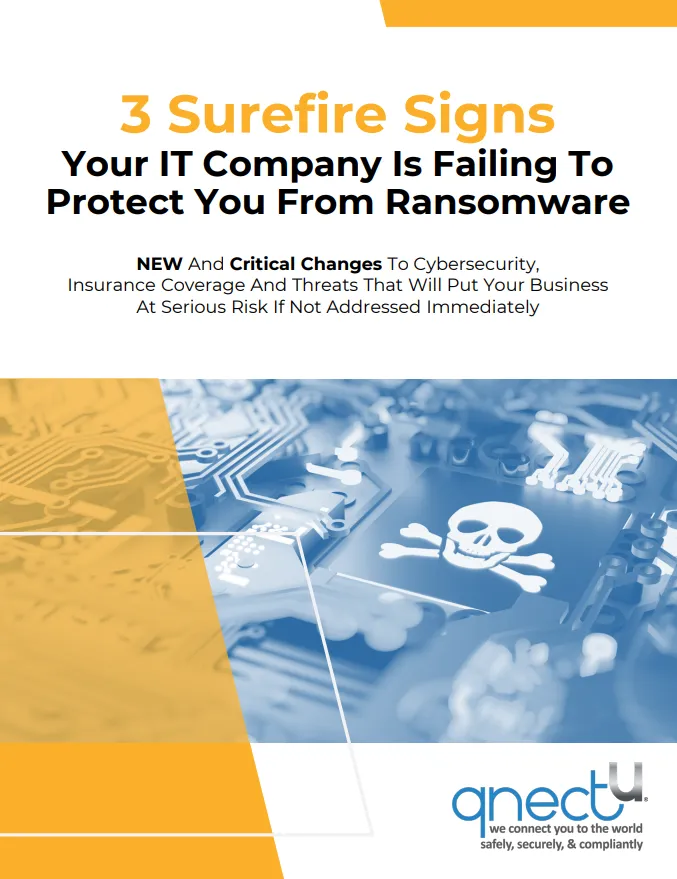
Discover The Truth Nobody Is Telling You About IT Security And The New, Critical Threats That WILL Put Your Business At Risk


Answers To Common Questions
Frequently Asked Questions
Do you offer access to senior IT consultants or a vCSO for oversight and guidance?
Yes, we offer access to senior IT consultants and provide vCSO(Virtual Chief Security Officer) as a service for our clients. Our vCSO service provides your organization with expert leadership and strategic direction tailored to your unique cybersecurity and legal compliance needs. We are here to help you navigate the complexities of cybersecurity and ensure that your security posture is robust, compliant, and capable of addressing evolving cyber threats. Book a call today to get expert help with your company’s cybersecurity and compliance.
Do you have a high level of confidence in your security posture? If so, can you explain why?
We have a high level of confidence in the security posture of our company and our clients. Our security stack includes several components to ensure strong and resilient cybersecurity measures. We provide comprehensive risk management, regular audits and assessments, advanced security technologies, employee training and awareness, and incident response planning. Our systems and solutions follow established industry standards and best practices to keep your company safe and your data secure. Since every company has different risks depending on the data, systems, utilization, and more, we can work with your team to develop a robust security plan and implement the proper measures as needed. Reach out today to strengthen your company’s security posture!
Do you have a Disaster Recovery (DR) plan? If so, what’s in place? Is it tested regularly?
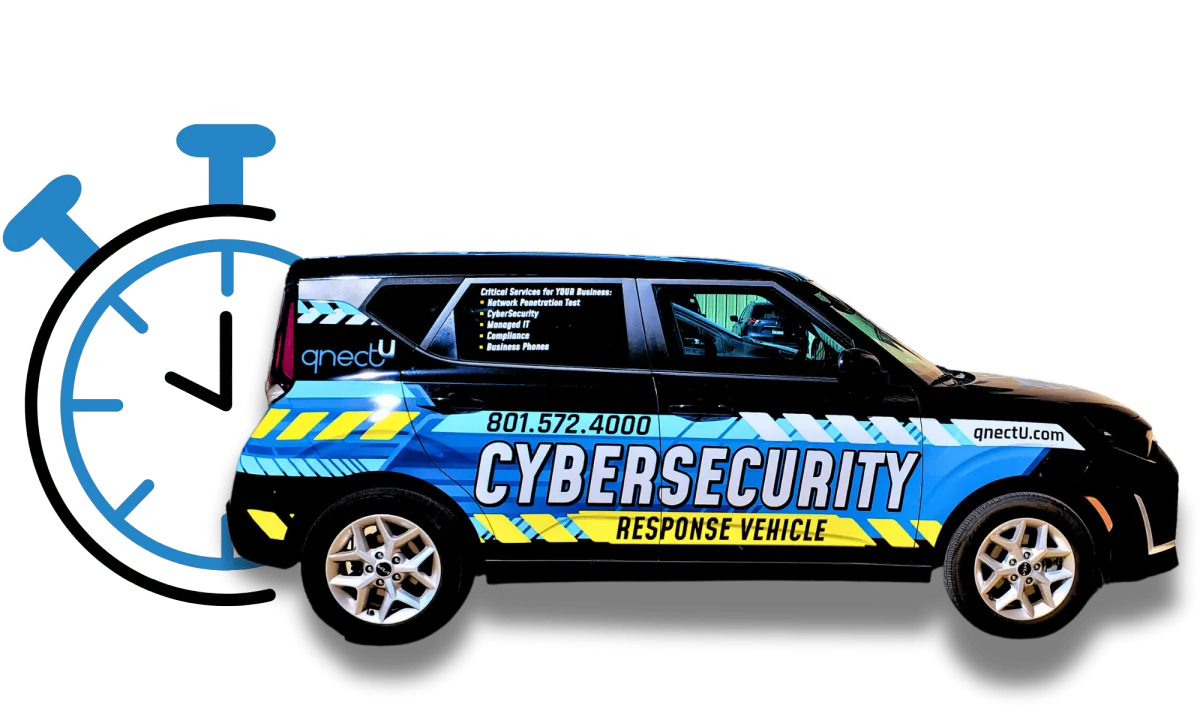
We provide robust Disaster Recovery (DR) plans, covering preventative, detective, and corrective measures. Our DR strategies are tailored to each client’s specific needs and are designed to ensure rapid recovery and continuity of operations in the event of any disaster. These plans are regularly reviewed and tested to guarantee they function effectively and meet the highest standards of resilience and reliability. And if a disaster were to occur outside of regular business hours, we have you covered! At qnectU, we have a response time of mere minutes for emergency after-hours calls, ensuring a rapid response to implement your Disaster Recovery plan. Book a call today to protect your company in the event of a disaster.
Do you perform regular risk assessments?
Here at qnectU, we conduct regular risk assessments as a core part of our risk management strategy. Our process is comprehensive, involving identification, categorization, and response planning for potential security risks, including technical vulnerabilities, access controls, and more. These assessments help us understand, control, and mitigate all forms of cyber risk, ensuring that our security measures are effective and up-to-date. But most importantly, we provide continual risk assessments at pre-determined intervals based on your company’s risk level. This ensures that issues are corrected, new risks are identified, and compliance is properly documented. Want to see how our in-depth business risk assessments work? Book a consultation today to get an in-depth risk assessment of your company’s current network security.
Do you follow proven change management principles?
We are committed to following proven change management principles. We understand the importance of structured and systematic processes in implementing changes that affect cybersecurity protocols and IT environments. Our approach is based on industry-recognized frameworks and methodologies that ensure changes are managed effectively, focusing on minimizing risks, enhancing security posture, and achieving strategic objectives.
Do you address all my compliance needs, including HIPAA?
We specialize in Compliance as a Service (CaaS), and our program is designed to meet a wide range of regulatory requirements to ensure that your business adheres to the highest standards of compliance. We demonstrate our compliance through detailed assessments, documentation, and third-party audits. Our expertise and ongoing support can give you confidence that your company’s sensitive information is managed securely and in full compliance with all regulations.
Is third-party auditing provided to ensure cybersecurity and compliance requirements are being met?
In today’s world a business can easily be compromised via a “supply chain hack.” There have been several instances where the IT company has exposed all of their clients to hacking due to their own lack of cybersecurity measures. In order to prevent this within our own company, we work closely with a third party for comprehensive auditing services to ensure that all cybersecurity and compliance requirements are met. Our rigorous audit process involves a thorough examination of our systems and practices against established industry standards and best practices. This collaboration provides an objective perspective and deep expertise to identify any potential vulnerabilities, ensuring that our cybersecurity measures are robust, up-to-date, and in full compliance with regulatory demands.
What is Compliance as a Service (Caas)?
Compliance as a Service (Caas) means that our experts will give you specialized help in handling all the rules and regulations your business needs to follow. We do this by providing expert guidance to help you determine what rules apply to your business and how to follow them. All while giving ongoing support to monitor your compliance status and updates in regulations. This may also include any advanced tools to help manage compliance tasks and risk management surrounding compliance. CaaS takes the hassle out of compliance so you can focus on running your business with confidence.
Who is Greg Mauer?
Gregory Mauer is the founder and CEO of our company, a best-selling author, speaker, and a cybersecurity & compliance expert. He has been on stage with the likes of the “Nice Shark”, Robert Herjavec, Siri co-founder Adam Cheyer, and business coach and author Mike Michalowicz.
Answers To Common Questions
Frequently Asked Questions
Do you offer access to senior IT consultants or a vCSO for oversight and guidance?
Yes, we offer access to senior IT consultants and provide vCSO(Virtual Chief Security Officer) as a service for our clients. Our vCSO service provides your organization with expert leadership and strategic direction tailored to your unique cybersecurity and legal compliance needs. We are here to help you navigate the complexities of cybersecurity and ensure that your security posture is robust, compliant, and capable of addressing evolving cyber threats. Book a call today to get expert help with your company’s cybersecurity and compliance.
Do you have a high level of confidence in your security posture? If so, can you explain why?
We have a high level of confidence in the security posture of our company and our clients. Our security stack includes several components to ensure strong and resilient cybersecurity measures. We provide comprehensive risk management, regular audits and assessments, advanced security technologies, employee training and awareness, and incident response planning. Our systems and solutions follow established industry standards and best practices to keep your company safe and your data secure. Since every company has different risks depending on the data, systems, utilization, and more, we can work with your team to develop a robust security plan and implement the proper measures as needed. Reach out today to strengthen your company’s security posture!
Do you have a Disaster Recovery (DR) plan? If so, what’s in place? Is it tested regularly?
We provide robust Disaster Recovery (DR) plans, covering preventative, detective, and corrective measures. Our DR strategies are tailored to each client’s specific needs and are designed to ensure rapid recovery and continuity of operations in the event of any disaster. These plans are regularly reviewed and tested to guarantee they function effectively and meet the highest standards of resilience and reliability. And if a disaster were to occur outside of regular business hours, we have you covered! At qnectU, we have a response time of mere minutes for emergency after-hours calls, ensuring a rapid response to implement your Disaster Recovery plan. Book a call today to protect your company in the event of a disaster.
Do you perform regular risk assessments?
Here at qnectU, we conduct regular risk assessments as a core part of our risk management strategy. Our process is comprehensive, involving identification, categorization, and response planning for potential security risks, including technical vulnerabilities, access controls, and more. These assessments help us understand, control, and mitigate all forms of cyber risk, ensuring that our security measures are effective and up-to-date. But most importantly, we provide continual risk assessments at pre-determined intervals based on your company’s risk level. This ensures that issues are corrected, new risks are identified, and compliance is properly documented. Want to see how our in-depth business risk assessments work? Book a consultation today to get an in-depth risk assessment of your company’s current network security.
Do you follow proven change management principles?
We are committed to following proven change management principles. We understand the importance of structured and systematic processes in implementing changes that affect cybersecurity protocols and IT environments. Our approach is based on industry-recognized frameworks and methodologies that ensure changes are managed effectively, focusing on minimizing risks, enhancing security posture, and achieving strategic objectives.
Do you address all my compliance needs, including HIPAA?
We specialize in Compliance as a Service (CaaS), and our program is designed to meet a wide range of regulatory requirements to ensure that your business adheres to the highest standards of compliance. We demonstrate our compliance through detailed assessments, documentation, and third-party audits. Our expertise and ongoing support can give you confidence that your company’s sensitive information is managed securely and in full compliance with all regulations.
Is third-party auditing provided to ensure cybersecurity and compliance requirements are being met?
In today’s world a business can easily be compromised via a “supply chain hack.” There have been several instances where the IT company has exposed all of their clients to hacking due to their own lack of cybersecurity measures. In order to prevent this within our own company, we work closely with a third party for comprehensive auditing services to ensure that all cybersecurity and compliance requirements are met. Our rigorous audit process involves a thorough examination of our systems and practices against established industry standards and best practices. This collaboration provides an objective perspective and deep expertise to identify any potential vulnerabilities, ensuring that our cybersecurity measures are robust, up-to-date, and in full compliance with regulatory demands.
What is Compliance as a Service (Caas)?
Compliance as a Service (Caas) means that our experts will give you specialized help in handling all the rules and regulations your business needs to follow. We do this by providing expert guidance to help you determine what rules apply to your business and how to follow them. All while giving ongoing support to monitor your compliance status and updates in regulations. This may also include any advanced tools to help manage compliance tasks and risk management surrounding compliance. CaaS takes the hassle out of compliance so you can focus on running your business with confidence.
Who is Greg Mauer?
Gregory Mauer is the founder and CEO of our company, a best-selling author, speaker, and a cybersecurity & compliance expert. He has been on stage with the likes of the “Nice Shark”, Robert Herjavec, Siri co-founder Adam Cheyer, and business coach and author Mike Michalowicz.

Innovation
Fresh, creative solutions.

Integrity
Honesty and transparency.

Excellence
Top-notch services.
FOLLOW US


Subscribe to our newsletter!
COMPANY
LEGAL
© Copyright 2026 qnectU